Distance scale
Cepheids relate the measured period to luminosity.
Scientific/historical source ↗THE HUMAN SIDE OF THE COSMOS / HISTORY ARCHIVE
From Cepheids to event horizons. Not a gallery of myths about geniuses, but a history of the measurements, models and questions that changed astrophysics.
10 MILESTONES / SELECTED CHRONOLOGY
Selective route, not an exhaustive history of the discipline. Opening and publication dates vary.
Cepheids relate the measured period to luminosity.
Scientific/historical source ↗Einstein's equations and Schwarzschild's solution open the language of strong gravity.
Scientific/historical source ↗Spectral analysis and ionization theory are changing our understanding of the composition of stars.
Scientific/historical source ↗Distances to galaxies are compared with their redshifts.
Scientific/historical source ↗Relativistic degeneracy limits the mass of an idealized white dwarf.
Scientific/historical source ↗Penrose's theorem: black hole formation is a robust prediction of general relativity under certain conditions.
Scientific/historical source ↗Rotation curves become part of the evidence for dark matter.
Scientific/historical source ↗First direct observation of gravitational waves on September 14, 2015; publication - in 2016.
Scientific/historical source ↗The first image of the bright ring and central radiation deficit of a supermassive black hole.
Scientific/historical source ↗The image of a source at the center of the Milky Way complements data on stellar orbits.
Scientific/historical source ↗07 PORTRAITS / REAL ARCHIVAL PHOTOGRAPHS
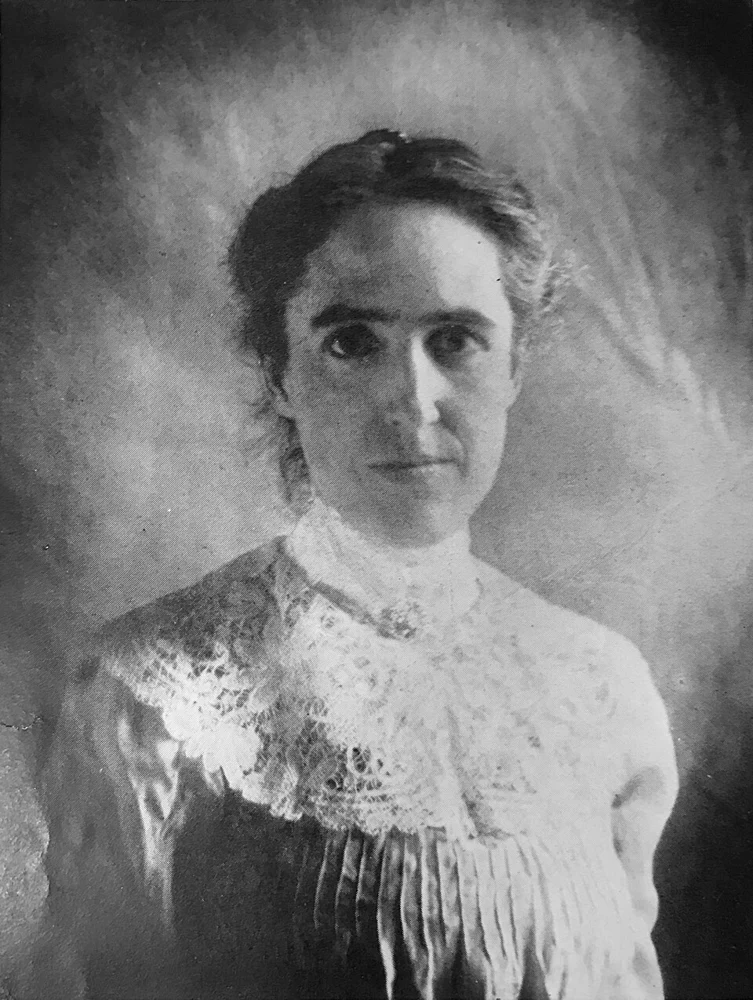
1912 / SPACE RULER
The relationship between the period and luminosity of Cepheids became the key to the extragalactic distance scale. Zero point calibration requires independent distances; The period itself does not yet give the distance without calibration and taking into account absorption.
Author unknown · Harvard College Observatory · Public domain
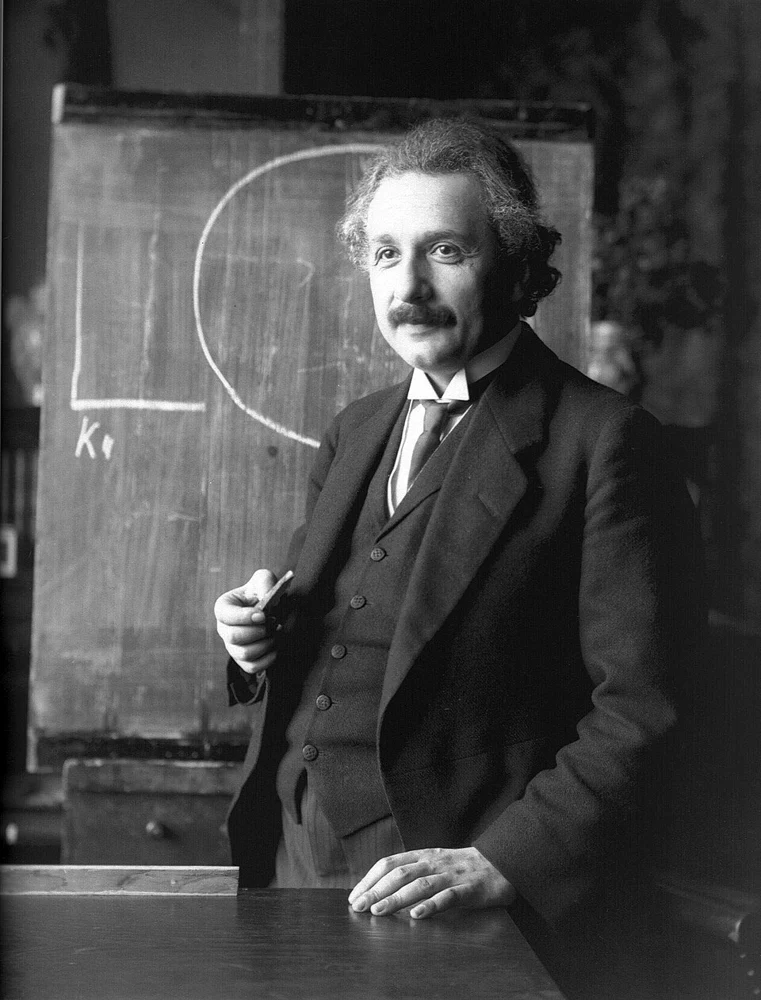
1915 / GEOMETRY OF GRAVITY
The equations of general relativity related geometry to energy and momentum. The theory predicted new effects, tested through the movement of bodies, light and gravitational waves. Einstein's Nobel Prize is related to the photoelectric effect, not to general relativity.
Ferdinand Schmutzer, 1921 · Public domain
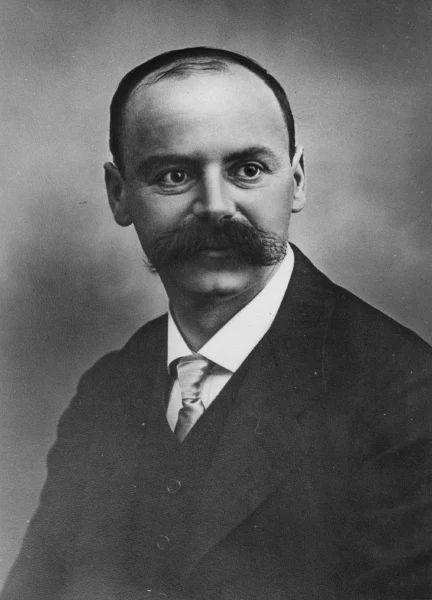
1916 / EXACT SOLUTION
The solution of Einstein's equations for a spherically symmetric vacuum field became the basis for the study of non-rotating compact objects. The modern understanding of the horizon and global structure developed later; The entire theory of black holes cannot be attributed to one work.
Historical portrait · author unknown · Public domain
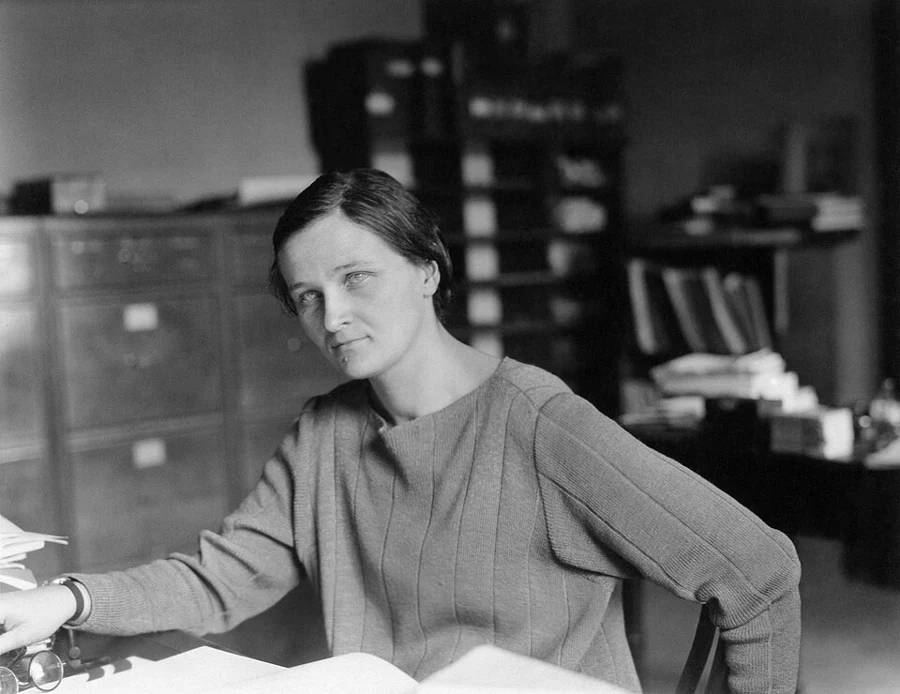
1925 / COMPOSITION OF STARS
Using ionization theory and stellar spectra, Payne showed the fundamental role of hydrogen and helium in the composition of stars. The strength of the line depends not only on the amount of the element, but also on temperature, ionization and the state of the atmosphere.
Smithsonian Institution/Science Service; restoration by Adam Cuerden Public domain

1929 / THE EXPANDING UNIVERSE
Observations of Cepheids have strengthened the extragalactic picture; work in 1929 established the relationship between distances and removal rates. The modern name of the law is Hubble–Lemaître: Lemaître's theoretical and observational contributions cannot be excluded from history.
Johan Hagemeyer · Public domain
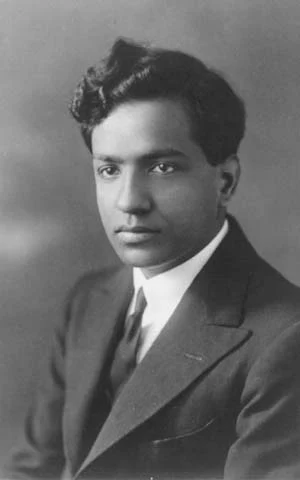
1930s / EVOLUTION OF STARS
The relativistic theory of degenerate electron gas has shown a limit to the mass of a cold, non-rotating white dwarf. The often given ≈1.4 M☉ depends on composition and idealizations; it is not the universal boundary of all compact objects.
AIP · Public domain by Wikimedia Commons card
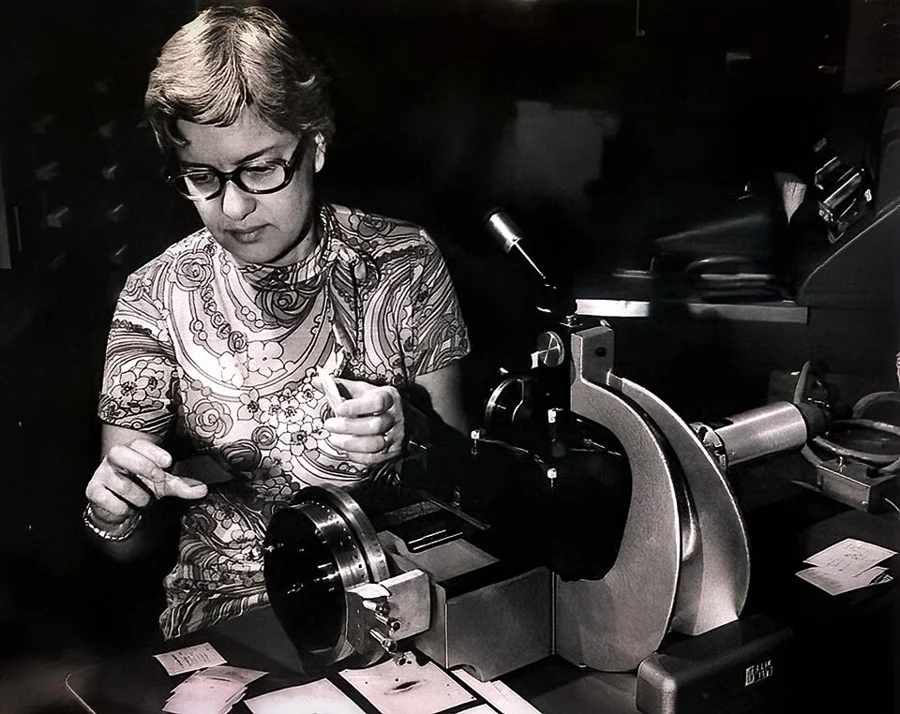
1970s / DYNAMICS OF GALAXIES
Rubin and Kent Ford examined the rotation curves of galaxies, strengthening evidence of missing visible mass. This is a contribution to the body of evidence for dark matter, not a direct detection of a new particle.
NOIRLab / NSF / AURA · CC BY 4.0; the image is reduced and displayed cropped
Terms CC BY 4.0 ↗History is created collectively. This introductory archive does not cover all schools, countries and participants; dates and interpretations should be checked against primary publications. Portraits are real archival images, not AI reconstructions. Copyright for third party images remains.